
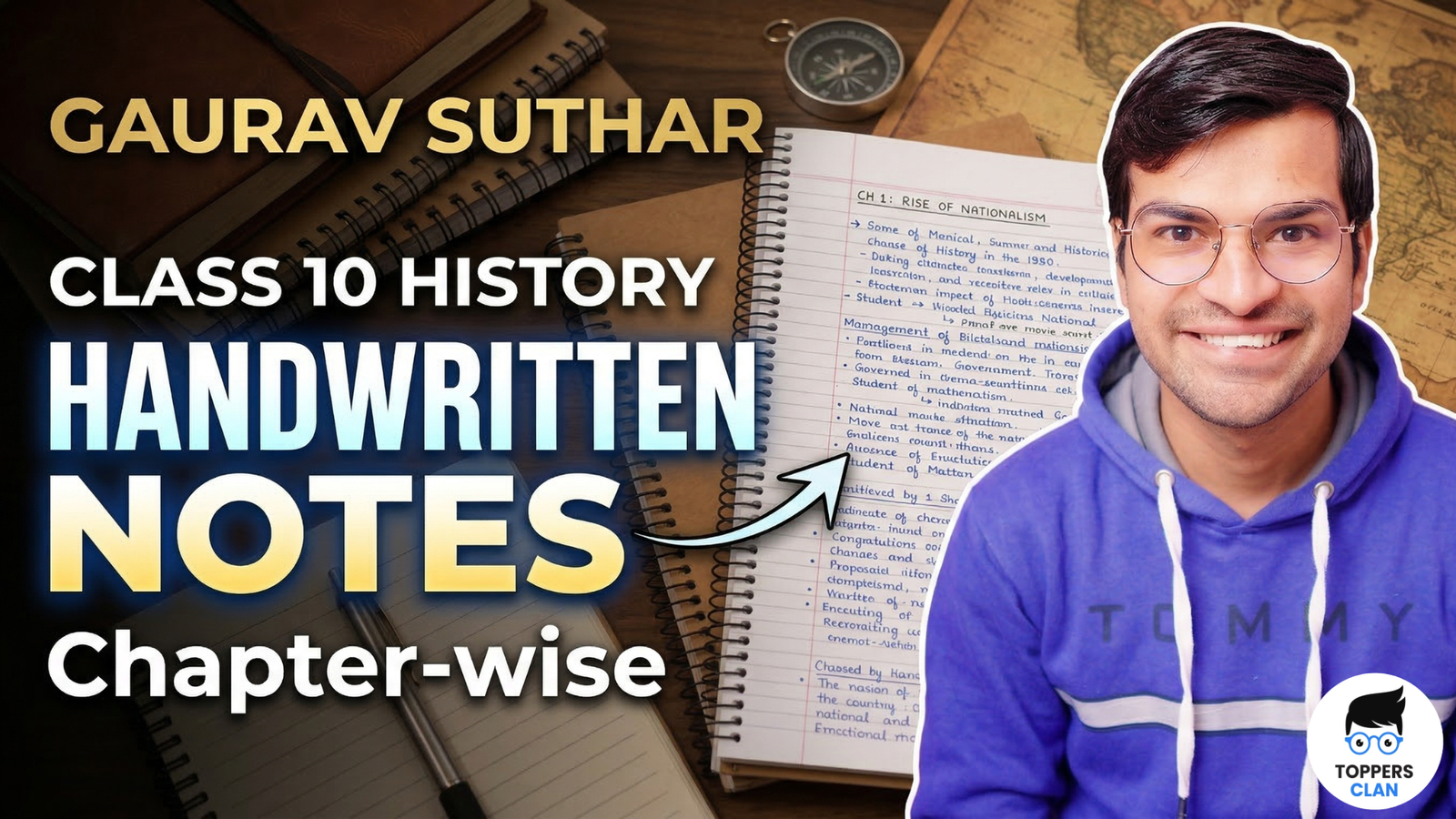
As we enter the final stages of the 2026 academic session, students across the country are keeping a close watch on official announcements from the board. With the admit card release and the final exam dates approaching quickly, your focus must shift toward high-impact exam preparation. These exam updates are important, but what truly determines your success is how well you revise. Among all subjects, Social Science is a major score-booster, and using Class 10 History Chapter-wise handwritten notes is one of the most effective study strategies to master the syllabus and secure top marks.
The Strategic Role of the Grade 10
In the current educational landscape, the CBSE Class 10 Board Exams remain a pivotal turning point for every student. The performance you deliver this year is not merely a reflection of your hard work; it serves as a foundational credential that opens doors to your future. Whether you aim to pursue a career in the medical field, engineering, business, or the arts, your board results play a key role in stream selection and college admissions.
Social Science is often the subject that bridges the gap between a good percentage and an exceptional one. It is a unique blend of History, Geography, Political Science, and Economics. This multidisciplinary approach requires students to develop a variety of skills, from analytical thinking to memorization of key historical timelines. Because the volume of the NCERT syllabus is so vast, having a clear and organized method of study is the only way to stay ahead of the competition.
Why Do Students Struggle with Class 10 Social Science?
The jump from middle school to the Class 10 curriculum is quite steep. Many students find themselves overwhelmed by the sheer depth of the topics. Here are the most common reasons why Social Science can feel intimidating:
- Volume of Content: The textbooks are filled with long, dense chapters that can be difficult to read through multiple times.
- Technical Vocabulary: Concepts in Economics and Civics often use specialized language that is hard for a 15-year-old to grasp without simplified explanations.
- Difficulty in Retention: Since there are four different books to study, students often find that they forget earlier chapters by the time they reach the end of the syllabus.
- Shift to Application-Based Questions: The 2026 Board Exams are expected to focus more on competency-based questions rather than simple rote learning. This means you must understand the ‘why’ behind historical events, not just the ‘when.’
Given these hurdles, relying solely on heavy textbooks for last-minute revision is often ineffective. This is why handwritten study materials have become the preferred choice for toppers.
The Advantage of Using Handwritten Notes
There is a scientific reason why handwritten notes are more effective for exam preparation. When information is presented in a personal, structured format, the brain processes it more efficiently than standard printed text. High-quality notes, such as the Gaurav Suthar History Chapter-wise notes, act as a bridge between complex theory and easy recall.
Here is why you should switch to handwritten resources:
- Visual Organization: These notes utilize mind maps and flowcharts, which allow you to visualize the sequence of historical events instantly.
- Keyword Focus: Instead of wading through 100-page chapters, you can focus on the bolded keywords that examiners look for when grading your paper.
- Simplified Language: Complex historical theories are broken down into student-friendly English, making it much easier to understand the core message.
- Time Efficiency: During the stressful days leading up to the exam dates, you can revise an entire chapter in just 10 to 15 minutes using bulleted summaries.
Why Gaurav Suthar’s Notes are the Top Choice for 2026
In the online education space, Gaurav Suthar has become a trusted name for providing the most reliable study aids for CBSE students. His notes are specifically designed to align with how students actually think and learn.
Key Highlights of these Notes:
- 100% NCERT Alignment: Every single page is strictly based on the latest NCERT syllabus, ensuring you don’t waste time on topics that won’t appear in the exam.
- Exam-Focused Content: The material highlights frequently asked questions (FAQs) and important topics that have appeared in previous board papers.
- Memory Shortcuts: One of the best features is the use of mnemonics to help you remember long lists of dates, names, and treaty terms.
- Clean and Clear Formatting: The handwriting is legible and organized, reducing mental fatigue during long study sessions.
Download the Class 10 History Chapter-wise Handwritten Notes PDF
To help you excel in your 2026 Board Exams, we have provided the access links for these essential resources below. You can download the Subject-wise History Chapter-wise Handwritten Notes to keep on your device for quick reference.
History Notes –
Steps to Access the Notes:
- Locate the official download link provided in the section above.
- Click on the link to open the secure PDF file in your browser.
- Select the ‘Download’ or ‘Save’ option to keep a copy of the Handwritten Notes PDF for offline use.
Having these digital files on your smartphone or tablet means you can turn any spare moment—whether you are commuting or taking a break—into a productive revision session.
Top 5 Preparation Tips for the 2026 Board Exams
Even with the best notes, your study strategy will determine your final result. The Toppers Clan Editorial Team recommends the following approach:
- Consistent Micro-Revision: Do not wait for the admit card release to start your final revision. Spend 20 minutes daily reviewing handwritten mind maps to build long-term memory.
- Master the Map Work: In History and Geography, map pointing is a guaranteed way to score marks. Use the simplified diagrams in the notes to practice regularly.
- Analyze Previous Year Papers: After finishing a chapter from Gaurav Suthar’s notes, immediately look at questions from the last 5 years to see if you can apply what you learned.
- Simulate Exam Conditions: Once the official exam dates are announced, start taking full-length mock tests. This helps build the stamina needed for the 3-hour exam window.
- Focus on Paper Presentation: Use bullet points and headings just like they are used in the handwritten notes. A clean paper is much easier for an examiner to grade highly.
Conclusion
Preparing for the CBSE Class 10 Board Exams in 2026 doesn’t have to be a source of constant stress. By using structured, chapter-wise handwritten notes, you can simplify the toughest parts of the History syllabus and walk into the exam hall with confidence. Success is built through consistent effort and the use of smart resources that maximize your efficiency.
Keep a close eye on official announcements regarding your exam schedule, but keep your head down and focus on your exam preparation. With the right tools and a positive mindset, you are fully capable of achieving academic excellence this year. Happy studying and good luck for your 2026 Boards!