
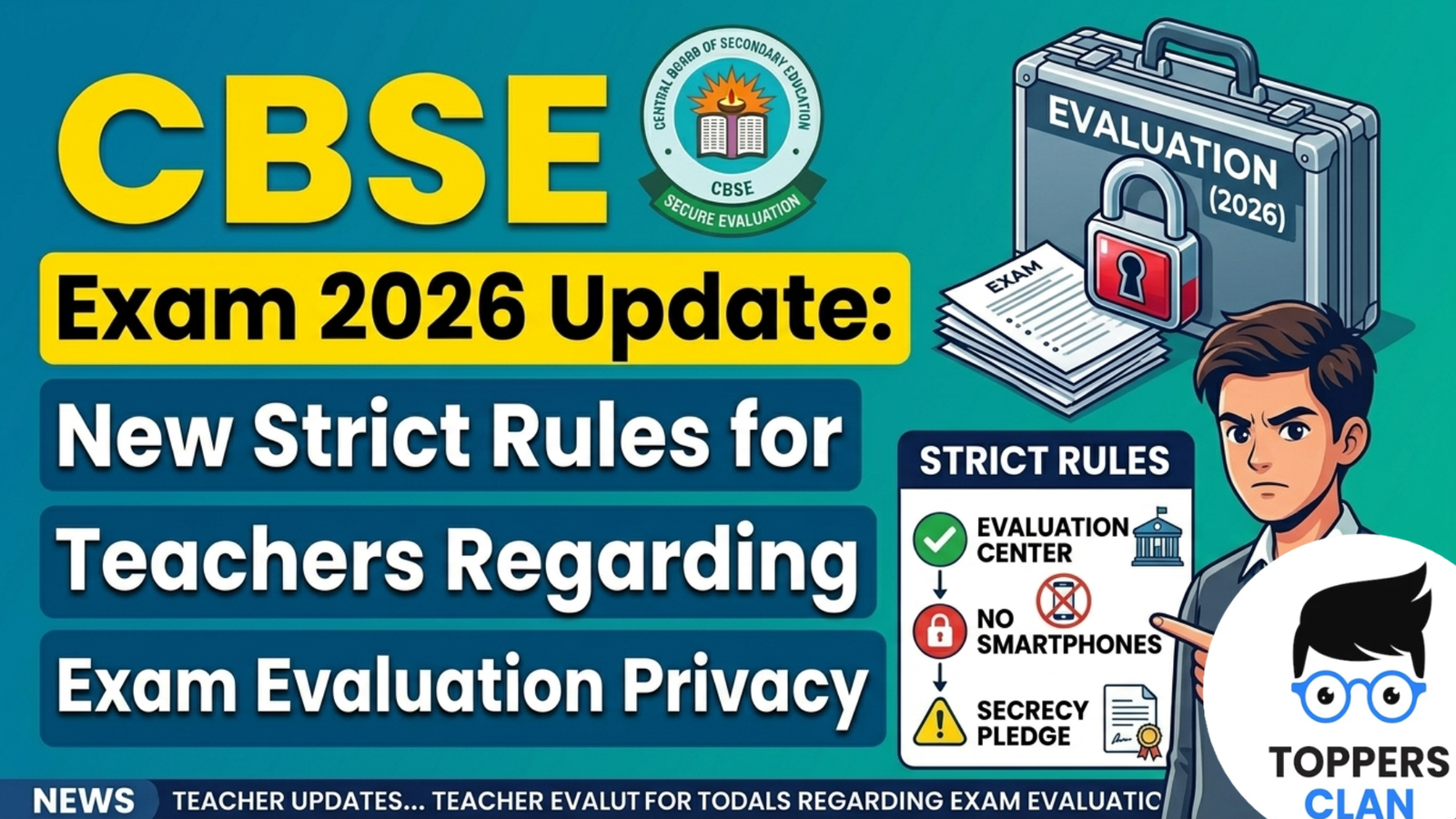
The Central Board of Secondary Education has recently shared a significant official announcement aimed at maintaining the privacy and sanctity of the CBSE board exams 2026. This latest exam update focuses on the evaluation process for Class 10 and Class 12, ensuring that result preparation remains confidential and free from exam rumors. For students awaiting their scores, understanding these official notices is essential to differentiate between genuine information and social media speculation.
Understanding the New CBSE Advisory for Evaluators
As the checking of answer sheets for the 2026 board sessions progresses, the board has noticed a concerning trend. Several educators participating in the paper checking process have been seen discussing their experiences on various internet platforms. To curb this, the board has released a formal circular specifically for teachers and school administrators. This document serves as a reminder that the integrity of the examination system must be protected at all costs.
According to the board, some teachers have been using social media to share personal opinions, specific details about student answers, or general feedback about the difficulty level of the checked papers. While these posts might seem harmless, they often lead to widespread confusion among the student community and their parents. To prevent the spread of misleading information, the board has now prohibited all evaluators from posting any content related to the assessment phase on public forums.
The Importance of Confidentiality in Paper Checking
Why is the board being so strict about what teachers post online? The answer lies in the sensitivity of the data involved. When a teacher shares even a small detail about how marks are being awarded or how a certain question is being graded, it can be misinterpreted by thousands of students. This often leads to unnecessary exam stress and panic.
Here are the primary reasons why the board demands absolute secrecy:
- Preventing False Expectations: If a teacher suggests that the checking is ‘lenient,’ students might develop unrealistic expectations about their percentages.
- Data Security: The way marks are uploaded and verified is part of a secure digital infrastructure that must not be exposed to the public.
- Professional Ethics: Evaluators are trusted with the academic future of millions of students, and professional conduct requires them to keep their work private.
- Avoiding Rumors: Fragmented information can quickly turn into viral fake news regarding result dates or grace marks.
Key Restrictions Mentioned in the Official Notice
Teachers involved in the Class 10 and Class 12 evaluation have been given clear instructions. The board has identified specific behaviors that are now considered violations of protocol. Any teacher found engaging in these activities may face disciplinary action or professional consequences.
Important restrictions for evaluators include:
- No Social Media Commentary: Teachers must not post comments or videos on YouTube, X (Twitter), Instagram, or Facebook regarding the evaluation center activities.
- Prohibition of Opinion Sharing: Sharing personal views on whether a question paper was ‘tricky’ or ‘easy’ while the evaluation is ongoing is strictly forbidden.
- Confidentiality of Assessment Patterns: Information regarding the marking scheme or how internal instructions are being applied must not be leaked.
- Restraint and Dignity: Teachers are expected to perform their duties with the highest level of professionalism and dignity, ensuring that no action of theirs brings disrepute to the education system.
How This Update Affects Students and Parents
For students, this official notice is actually a piece of good news. It ensures that the information you receive about your board results will only come from official CBSE channels. When teachers share unverified opinions online, it often creates a chaotic environment where students feel anxious about their performance based on one person’s perspective.
By enforcing these rules, the board is ensuring that the evaluation system remains fair and standardized. Every student’s paper is checked according to a pre-approved marking scheme, and the board wants to ensure that this process remains unbiased by public discourse. Students are advised to ignore any ‘leaks’ or ‘insider information’ shared by individuals claiming to be evaluators on social media platforms.
The Role of School Principals
The board has not just sent this message to the teachers directly; they have involved the heads of schools as well. Principals of all CBSE-affiliated schools have been instructed to act as supervisors. They are responsible for making sure that every single teacher from their institution who is assigned to an evaluation center is fully aware of these confidentiality rules.
Key responsibilities for school heads:
- Immediate Communication: Schools must inform their staff about the new advisory without any delay.
- Monitoring Conduct: Principals are expected to ensure their teachers adhere to professional standards during the entire exam season.
- Enforcing Guidelines: Any breach of these rules must be reported, as the board views sharing exam secrets as a serious breach of trust.
What to Do if You See ‘Evaluation Leaks’ Online
In the digital age, it is very common to see videos titled ‘How CBSE is checking papers this year’ or ‘Secret marking tips from a board examiner.’ Students must be very careful with such content. Most of these are clickbait videos designed to get views and are not based on official board policies.
If you encounter such information, remember these important facts:
- Only trust official websites: Always verify any exam news at https://www.cbse.gov.in/.
- Official circulars are key: If a major change in marking or evaluation happens, it will be published as a PDF on the CBSE official portal.
- Ignore the noise: Focus on your upcoming exams or entrance tests instead of worrying about rumors regarding paper checking.
Maintaining the Integrity of the 2026 Examination System
The board’s decision to issue this strict warning highlights their commitment to a transparent and error-free result. In 2026, with the integration of more technology in education, the risk of digital misinformation is higher than ever. By silencing unauthorized voices, the board ensures that the only voice that matters is the official communication from the examination controller.
This move also protects the teachers themselves. By maintaining confidentiality, they avoid getting involved in controversies or legal issues that could arise from misrepresenting the board’s policies. It creates a safe environment where the focus remains solely on the accurate assessment of student performance.
Final Summary for Students
To wrap up, the CBSE evaluation process is a highly confidential operation. The board has taken a tough stand against any social media leaks to protect the interests of the millions of students who appeared for the 2026 exams. Teachers have been strictly warned against sharing opinions or data online, and schools are under strict instructions to enforce these rules.
Important takeaway: Do not believe everything you see on social media regarding your exam results or paper checking. Wait for official announcements from the board to get the most accurate and reliable updates. Your hard work in the board exams will be evaluated fairly, and the board is working hard to ensure that the result preparation is handled with the highest level of professionalism and secrecy.